Applications of Artificial Intelligence
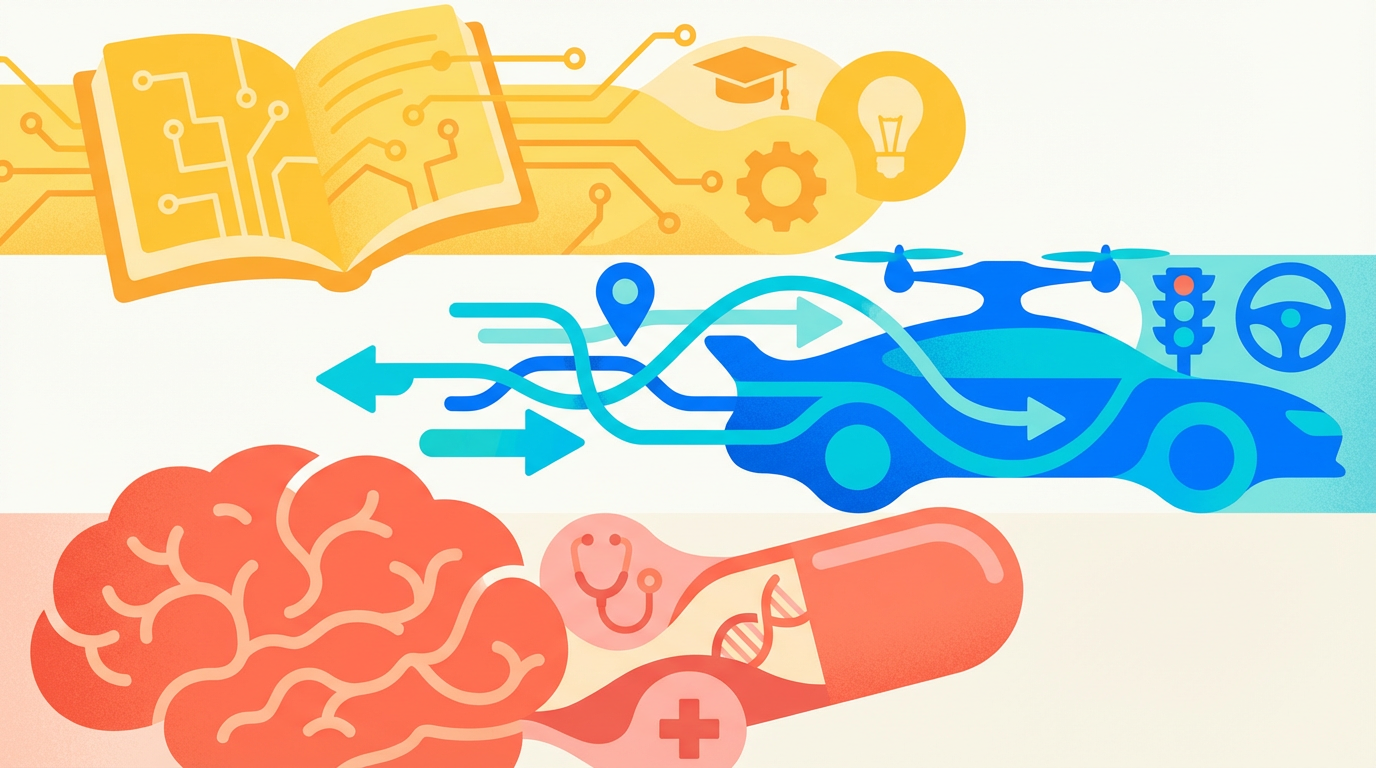
Artificial Intelligence (AI) has transformed numerous sectors by automating complex tasks, enhancing decision-making, and enabling innovations that were previously unattainable. From healthcare to finance, AI's applications leverage algorithms, machine learning, and data analytics to process vast amounts of information, identify patterns, and predict outcomes. This chapter explores these real-world implementations, highlighting their impact on efficiency, accuracy, and societal benefits while acknowledging the challenges such as ethical considerations and data privacy.
The integration of AI into various industries began in earnest during the mid-20th century with early computational models, evolving rapidly with advancements in computing power and data availability. Today, AI applications span diagnostic tools in medicine, predictive models in finance, and autonomous systems in transportation. By examining these use cases, readers gain insight into AI's practical contributions and the underlying technologies driving them.
Understanding AI's applications requires recognizing both historical developments and current trends. Early AI efforts focused on rule-based systems, but modern applications employ deep learning and neural networks for more nuanced tasks. This evolution underscores AI's role as a catalyst for innovation, with ongoing research aiming to address limitations like bias and interpretability.
Throughout this chapter, we delve into specific industries, supported by examples, timelines, and structured data. These illustrations demonstrate AI's versatility and its potential to shape the future of work, health, and entertainment.
AI in Healthcare
AI in Healthcare: Diagnosis and Treatment
Artificial Intelligence has revolutionized healthcare by enhancing diagnostic accuracy and personalizing treatment plans. Machine learning algorithms analyze medical images, such as X-rays and MRIs, to detect anomalies like tumors or fractures with precision often surpassing human experts. For instance, AI-driven tools employ convolutional neural networks to process vast datasets, identifying patterns that indicate early-stage diseases, thereby facilitating timely interventions.
In treatment, AI optimizes drug discovery and dosage regimens through predictive modeling. Pharmacogenomics uses AI to predict how individuals will respond to medications based on genetic data, reducing adverse reactions and improving outcomes. Additionally, AI-powered robots assist in surgeries, providing steady precision in procedures like minimally invasive operations, which minimize recovery times and complications.
Beyond diagnostics and treatment, AI supports administrative tasks in healthcare, such as scheduling and resource allocation, freeing up medical professionals to focus on patient care. The historical context of AI in healthcare traces back to the 1960s with early expert systems, evolving into today's sophisticated models that integrate electronic health records for comprehensive patient profiles.
However, challenges include ensuring data privacy and mitigating biases in AI models trained on limited datasets. Ongoing research emphasizes ethical AI deployment, balancing innovation with patient safety and regulatory compliance.
Overall, AI's applications in healthcare illustrate its potential to address global health challenges, from pandemics to chronic diseases, by democratizing access to advanced medical insights.
Case Study: IBM Watson for Oncology
IBM Watson for Oncology, introduced in 2012, demonstrated AI's potential in cancer treatment. The system analyzed patient data and medical literature to suggest personalized treatment options, assisting oncologists at Memorial Sloan Kettering. While initially promising, it highlighted challenges like over-reliance on AI recommendations, leading to refinements for better accuracy and integration with human expertise.
Milestones in AI Healthcare Applications
Early Expert Systems
Development of rule-based systems like MYCIN for diagnosing bacterial infections and recommending treatments.
Rise of Machine Learning
Adoption of algorithms for image analysis, such as detecting diabetic retinopathy from retinal scans.
Deep Learning Breakthroughs
Integration of neural networks in tools like Google's DeepMind for protein folding predictions, aiding drug discovery.
COVID-19 Response
AI models used for vaccine development and predictive analytics to track pandemics and allocate resources.
AI in Finance and Business
AI in Finance and Business: Automation and Insights
In the finance sector, AI algorithms automate trading, risk assessment, and fraud detection, processing transactions at speeds unattainable by humans. High-frequency trading systems use machine learning to analyze market data in real-time, executing trades based on predictive models that anticipate price fluctuations, thereby optimizing investment strategies.
AI enhances decision-making through predictive analytics, forecasting economic trends and customer behaviors. Banks employ AI for credit scoring, evaluating loan applications with greater accuracy by considering non-traditional data sources like social media activity, reducing defaults and expanding access to credit.
Business applications extend to customer service with chatbots and virtual assistants that handle inquiries, personalize marketing, and streamline operations. Supply chain management benefits from AI-driven demand forecasting, minimizing inventory costs and improving efficiency across industries.
Historically, AI in finance emerged in the 1980s with expert systems for loan approvals, evolving with big data and cloud computing. Despite advantages, concerns persist about algorithmic biases and market volatility, prompting regulatory frameworks to ensure transparency.
Emerging trends include decentralized AI for blockchain-based transactions and ethical AI practices to mitigate risks in high-stakes financial environments.
Examples of AI Applications in Finance
| Application | Industry Impact | Key Benefits |
|---|---|---|
| Algorithmic Trading | Stock Markets | Faster execution and reduced human error |
| Fraud Detection | Banking | Identification of suspicious patterns in transactions |
| Robo-Advisors | Investment | Personalized portfolio management at lower costs |
| Credit Scoring | Lending | Improved risk assessment using diverse data |
AI systems in banking have been reported to reduce fraud losses by up to 30% through anomaly detection, according to industry estimates from sources like McKinsey.
AI in Transportation and Logistics
AI in Transportation and Logistics: Efficiency and Safety
Artificial Intelligence is pivotal in transportation, powering autonomous vehicles that navigate roads using sensors, cameras, and algorithms to interpret surroundings. Self-driving cars from companies like Tesla and Waymo employ deep learning for real-time decision-making, promising to reduce accidents caused by human error and alleviate traffic congestion.
In logistics, AI optimizes route planning and supply chain management by analyzing variables such as traffic patterns, weather, and demand forecasts. Drones and robotic systems in warehouses automate picking and sorting, enhancing speed and accuracy in e-commerce fulfillment.
Beyond vehicles, AI improves public transit through predictive maintenance of infrastructure, anticipating failures and scheduling repairs to minimize disruptions. Ride-sharing platforms use AI for dynamic pricing and matching, balancing supply and demand efficiently.
The evolution of AI in transportation dates to the 1970s with early robotics, accelerating with GPS and sensor technologies in the 2000s. Current challenges include regulatory hurdles, cybersecurity risks, and ensuring AI systems handle edge cases like adverse weather.
Future developments aim for fully integrated smart cities, where AI coordinates multimodal transport, reducing emissions and improving accessibility.
Illustrative Diagram: AI-Driven Route Optimization
Visualize a flowchart: Input data (traffic, weather) → AI algorithm processes → Outputs optimized routes. This demonstrates how machine learning integrates multiple variables for efficient logistics, reducing delivery times by an estimated 10-20% in pilot programs.
Key Developments in AI Transportation
Early Robotics
Introduction of automated guided vehicles (AGVs) in factories for material handling.
GPS Integration
Use of satellite navigation for real-time route guidance in logistics.
Autonomous Prototypes
Deployment of self-driving cars in controlled environments, leading to public testing.
Urban Mobility Solutions
AI in smart traffic systems and electric vehicle coordination for sustainable transport.
AI in Entertainment and Media
AI in Entertainment and Media: Content and Engagement
In entertainment, AI algorithms drive recommendation systems on platforms like Netflix and Spotify, analyzing user preferences to suggest content and personalize experiences. Machine learning models process viewing histories and ratings to predict interests, increasing engagement and retention through tailored suggestions.
Content creation benefits from AI tools that generate scripts, music, and visuals. Generative adversarial networks (GANs) produce realistic images and videos, used in filmmaking for special effects or virtual sets, streamlining production and reducing costs.
Gaming incorporates AI for adaptive gameplay, where non-player characters (NPCs) learn from player actions, creating dynamic and immersive experiences. Procedural generation uses AI to create vast game worlds, as seen in titles like No Man's Sky.
Historically, AI in media began with early computer graphics in the 1960s, evolving to sophisticated deepfakes and virtual reality. While innovative, issues like misinformation from deepfakes necessitate ethical guidelines and detection tools.
Emerging applications include AI-curated news feeds and interactive storytelling, enhancing user interaction while addressing concerns over bias and originality.
Examples of AI in Entertainment
| Application | Platform/Example | Impact |
|---|---|---|
| Recommendation Engines | Netflix | Boosts user satisfaction and content discovery |
| Content Generation | AI Art Tools (e.g., DALL-E) | Accelerates creative processes for artists |
| Game AI | Adaptive NPCs in Games | Enhances realism and replayability |
| Music Composition | AIVA Software | Creates original scores for media projects |
AI-driven recommendations account for approximately 75% of content views on streaming platforms like Netflix, based on industry reports.
Emerging Applications
Emerging Applications of AI: Innovation Across Fields
Beyond established sectors, AI is pioneering innovations in education, agriculture, and environmental monitoring. In education, adaptive learning platforms use AI to tailor curricula to individual student needs, tracking progress and providing personalized feedback to improve outcomes.
Agriculture benefits from AI-powered precision farming, where drones and sensors monitor crop health, optimizing irrigation and pest control to increase yields and reduce resource waste. Predictive models forecast weather impacts on harvests, aiding sustainable practices.
Environmental applications include AI for climate modeling and wildlife conservation, analyzing satellite data to detect deforestation or track endangered species. These tools support global efforts to combat climate change by providing actionable insights.
Historically, AI's role in these fields grew with cheap sensors and cloud computing in the 2010s, enabling data-driven decisions. Challenges involve data accessibility in remote areas and ensuring equitable benefits.
Future prospects envision AI integrating with the Internet of Things (IoT) for smarter cities, where systems monitor pollution and manage energy, fostering resilience and sustainability.
List of Emerging AI Applications
| Field | Key Application | Potential Benefits |
|---|---|---|
| Education | Personalized Tutoring | Improves learning efficiency and accessibility |
| Agriculture | Crop Disease Detection | Reduces losses and enhances food security |
| Environmental Monitoring | Deforestation Tracking | Supports conservation and policy-making |
| Education | Virtual Classrooms | Enables remote learning during disruptions |
| Agriculture | Yield Prediction | Optimizes resource allocation and profitability |
Case Study: AI in Conservation
Organizations like WWF use AI to analyze camera trap images for wildlife monitoring, identifying species and behaviors in real-time. This has led to better anti-poaching strategies, demonstrating AI's role in biodiversity preservation.